




The art of costume and production management

  • Theatre
  • Film
  • Advertising
Design and production

The whole process in one pair of hands

I create my designs using manual illustration techniques and coordinate their making together with tailors and pattern cutters. I keep costs down by recycling theatre resources and budgeting meticulously. I attend fittings and oversee the dress rehearsals, until I let go of my work on opening night.

What I do

Every design is a hand-drawn piece in its own right, rooted in the text, in research and in a solid command of the craft.

  • Hand-made designs using illustration techniques, each one an original piece in its own right
  • In-depth analysis of the script and characters
  • Formal and visual research to establish the production’s visual key
  • Hand-made collage moodboard that sets the atmosphere and colour key of the production
  • Fabric selection for technical needs and the production’s textile key
  • Close collaboration with the creative team and artists behind the production
  • Close collaboration with experts in tailoring, pattern cutting, footwear design, wigmaking and more
How I work

Logistics that support the artistic work, with control over the budget, deadlines and paperwork, so that the show is not only beautiful but also cost-effective.

  • Costume budget estimates and control
  • A work schedule coordinated with fittings, rehearsals (regular, media and dress), photo shoots, the premiere and the theatre’s daily routine
  • Expense control, with deliveries and orders kept in sync
  • Control of document flow and expense records
  • Using the theatre’s textile and material stock to optimise costs and work in a zero-waste spirit
  • A project summary in the form of documentation that makes future restoration, or recreating a costume for a new cast, easier
Work

From sketch to stage

01 / 05
Costume in production

A costume is also money

Two years on staff at Teatr Rozrywki as an assistant costume designer taught me to work meticulously, not only in the workroom but also in Excel. A costume is also money, spreadsheets, invoices and deadlines. Organisation and discipline are the foundation of success.

01 / 06

Budget

The budget for the whole show has to be carefully thought through, so that characters in leading, supporting and background roles keep the same standard of costume. It is also worth remembering that a costume is not just clothing, but also shoes, accessories, wigs, jewellery and underwear, none of which can be forgotten when planning spending.

Fabric swatches for a cost estimate
02 / 06

Schedule

To coordinate fittings, purchases, orders and workroom consultations, I always set a schedule that fixes the dates of the key production milestones, such as the costume review, photo shoot, media rehearsals, dress rehearsals, open rehearsals and the premiere.

Fabric with an original print
03 / 06

Optimisation

Cutting costs by using the theatre’s own resources – leftover fabric, old costumes or accessories – everything can be reused if you have an idea and aren’t afraid of alternative solutions! Not only cheaper, but zero waste too!

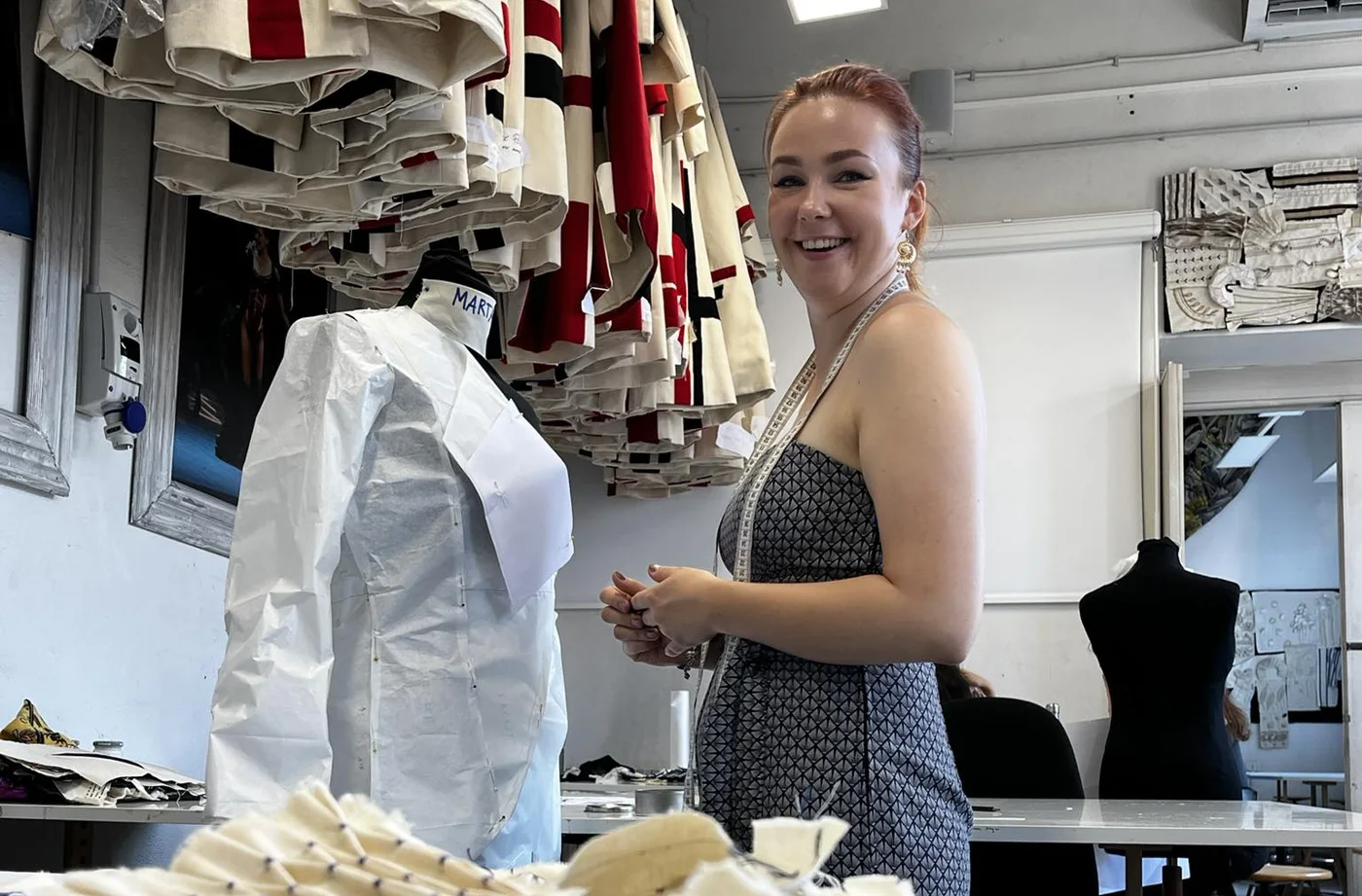
Anna Drobczyk in the costume workroom
04 / 06

Coordination

Working on costumes is a multi-threaded process that involves many departments of the theatre. It means coordinating dates, people, needs and solutions, so that on opening night everything is finished down to the last button.

Anna Drobczyk touching up an actor’s make-up on set
05 / 06

Collaboration

Creating costumes takes close collaboration with the director, choreographer, performers, tailors, pattern cutters and the makers of shoes, wigs, accessories and make-up. Without them, my visions would stay at the sketch stage forever.

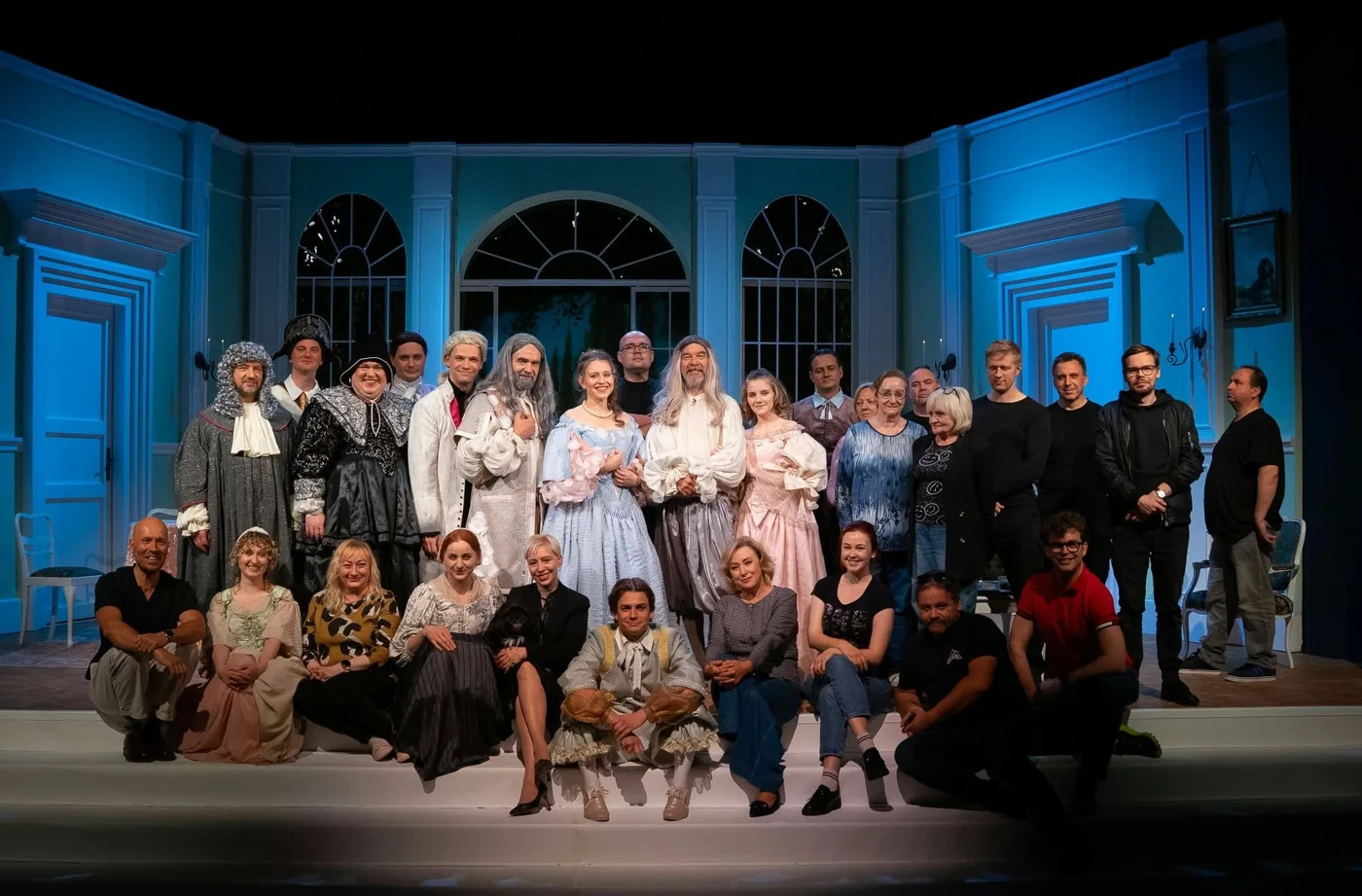
The cast and crew of Świętoszek on the Jaracz Theatre stage
06 / 06

Documentation

On opening night I hand the costumes over to the people who work at the theatre day to day, so it is important to give them complete documentation: how each costume was made, what it consists of, and how to remake it for a new cast or repair it.

Colour palette for a design
Process

From script to premiere

Five stages that give the finished work a beginning and an end, a message, a vision and an idea, but also concrete production assumptions, a plan for making it and a planned final result.

Step 01

Text analysis

Analysis of the text and characters. A collage moodboard: photographs, cuttings, drawings, shapes.

  • Breakdown of every scene
  • Character analysis in terms of costume, quick changes and the character’s arc
  • Concept talks with the director and the creative team
  • Setting the budget and schedule
Step 02

Moodboard

Cropping the moodboard and sampling colours, a palette for the whole production.

  • Defining the atmosphere and colour key of the show
  • Assigning colours to groups of characters
  • Colour consistency with the set and lighting design
Step 03

Fabric

Material swatches and hands-on tests. Coherence across the whole design.

  • Choosing fabrics to suit each costume’s purpose
  • Matching fabric properties to the performer’s movement and needs
  • Checking availability and prices
Step 04

Design

Hand-drawn designs with technical solutions, created with movement in mind.

  • Description of each costume element
  • Technical specification to help the costume move well
  • Using the theatre’s resources to keep costs and workload down
Step 05

Production

Fittings, alterations, sign-off. A costume ready for the dress rehearsal.

  • Fittings with the performers, open to their needs and ideas
  • Production consultations in the workrooms
  • Preparing and assembling the costumes before costume rehearsals
About
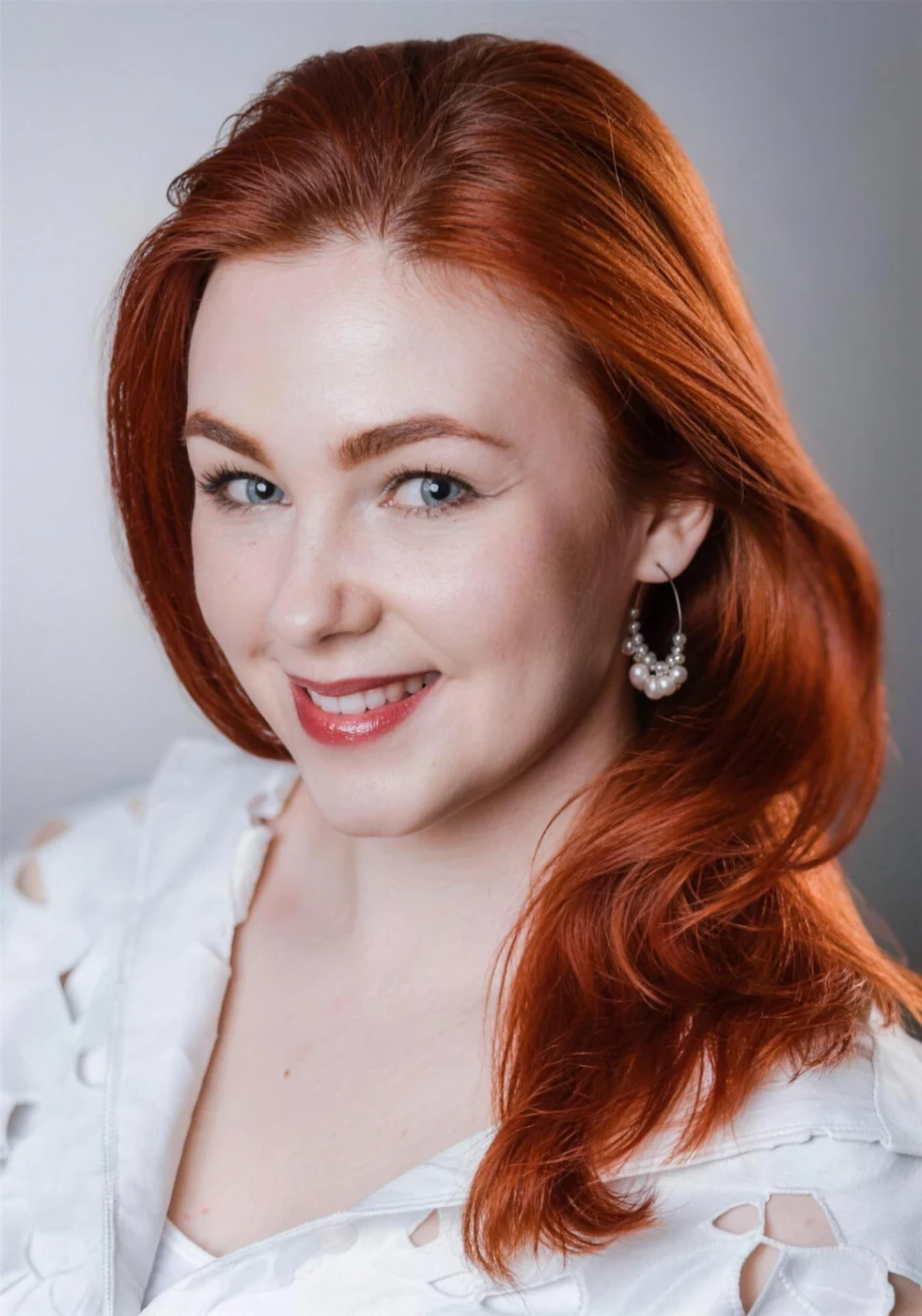
Portrait of Anna Drobczyk

The costume speaks first

I’m a costume designer with 9 years of experience in theatre, on film sets and in advertising. I work in a zero-waste spirit, using manual techniques. I have worked in Poland and Italy, gaining hands-on experience with costumes, teams and budgets, to build and grow awareness of the art of costume design.

01 / 05
Rome · [role, years]

Teatro dell’Opera di Roma

Working at the Rome Opera showed me how important precise communication is within a team, especially an international one. Firmness and good organisation are the key to understanding and respect between colleagues. It was also there, as in no other theatre, that I fell for the magic of detail and understood that exceptional costumes need enough time, so that every stage of making them is refined and done with care, not in a rush.

291

costume designs across 18 production concepts

244

costumes brought to the stage in 5 premieres

9

years of experience in theatre and film

3

working languages: Polish, English, Italian

“[Quote: the production’s director. 2–3 sentences on the collaboration, the quality of the designs and the budget.]”
[Full name]
[Role, theatre]
“[Quote: theatre management or head of the workroom. On organisation and logistics.]”
[Full name]
[Role, institution]
“[Quote: an actor or dancer. On comfort and fittings.]”
[Full name]
[Production, theatre]

Theatres I have worked with

Teatr Rozrywki w ChorzowieTeatr im. Stefana Jaracza w ŁodziTeatr Powszechny w ŁodziTeatr im. Stefana Żeromskiego w KielcachTeatr Polski we WrocławiuOpera Śląska w BytomiuTeatr RozbarkTeatro dell’Opera di RomaOfficina Farani
Interviews and media

Costumes on camera

01 / 08
Services

From concept to premiere

From concept to design

The offer covers design work based on the text supplied by the client. It includes:

  • A full set of hand-made designs
  • Colour key
  • Fabric key
  • Description and specifications to guide the further making of the costumes

From concept to premiere

Everything included in “From concept to design”, plus ongoing supervision of the production, namely:

  • Coordinating fittings and the work in tailoring, shoemaking, wig and other workrooms
  • Costume review and sign-off
  • Supervision of the photo shoot
  • Supervision of dress rehearsals right up to the premiere itself
  • Cost estimate and budget control during production

Production refresh

For productions that have been running for years or have had major cast changes, when the costumes need a new lease of life.

  • Costume review and a strategy for their renewal
  • Redesigning costumes in a newer, fresher form
  • Coordinating the making of new costumes based on the original designs or new ones
  • Adapting costumes to a new cast, materials and concept

My priorities

Budget

Delivered within the agreed budget, sensible in spending and ecological in the use of resources. Controlled from start to finish.

Deadlines

A schedule adapted to rehearsals, fittings and the premiere.

Communication

Factual and specific, clear to the artistic, production and accounting teams – everyone knows where they stand.

Team

Close collaboration with artists, the creative team and the makers – because a show is the work of many creators.

FAQ

Any questions?

The questions theatres and directors ask most often before we start working together. Can’t see yours? Write to me, I’ll reply within [48 h].

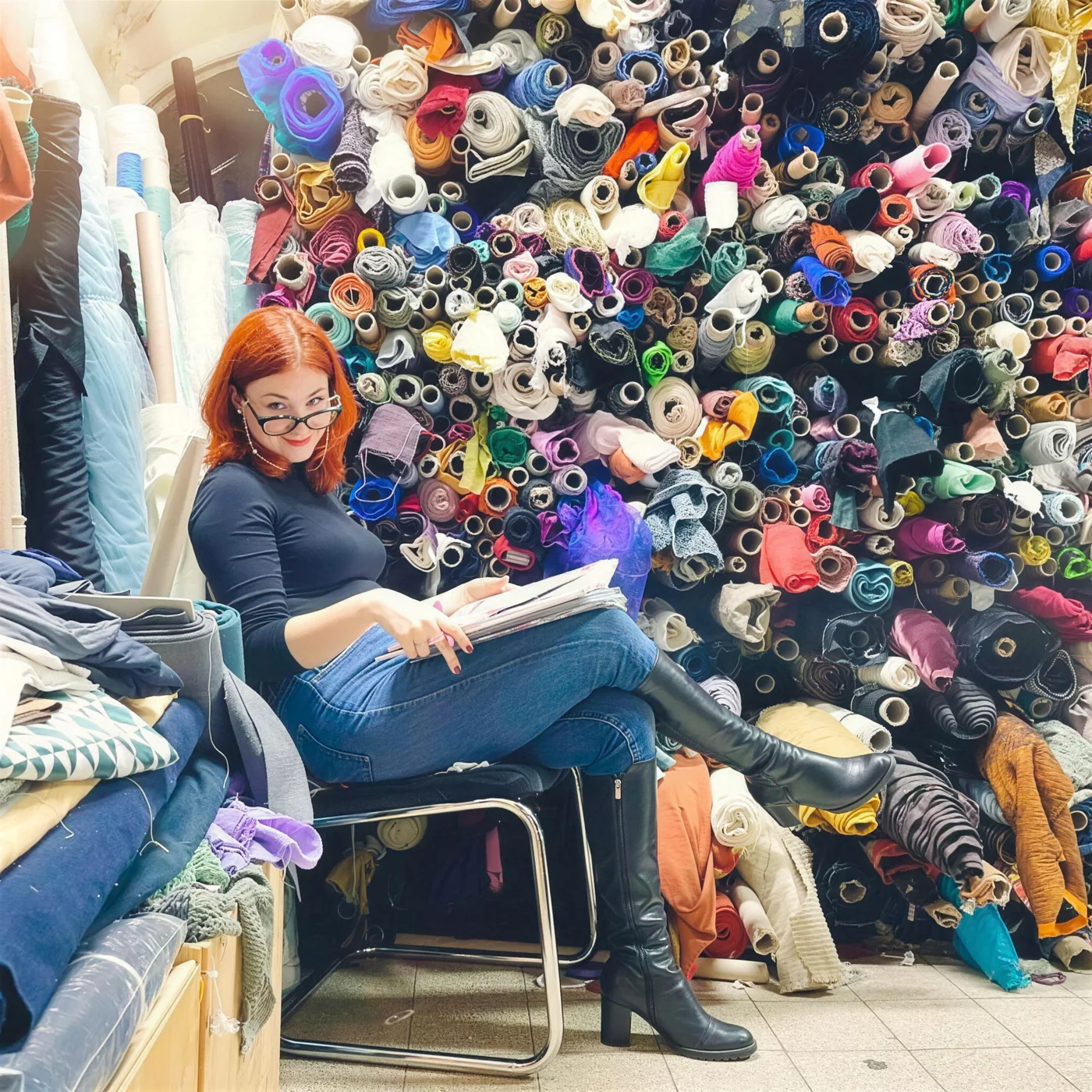
Anna Drobczyk at a fabric warehouse, in front of a wall of fabric rolls

Yes, I’m mobile and have worked with theatres in Łódź, Kielce, Wrocław and Rome. I have also taken on film and advertising projects in Warsaw, Wisła and other parts of Poland.

Yes, going through the fabric and costume stores is a standard part of my design process. Reusing what the theatre already has helps lower production costs and makes the work more environmentally friendly.

After reading the play or screenplay and talking with the director or client, I prepare a preliminary production cost estimate and an indicative work schedule. I base my quote on those.

Yes. Long-running productions often need their costumes adapted to a new cast. In that case I redesign the production or oversee the remaking of the costumes to the original costume designer’s designs.

Besides the illustration, every design comes with a description and a full set of visual technical references. I also stay in constant contact with the workrooms to agree on fabrics and accessories and to answer any question that comes up during production.

Yes, I design costumes for all kinds of stage and screen productions: ballet, opera, drama, dance theatre, musicals, variety shows, historical pieces and children’s shows. Tell me what you need and I’ll propose a solution.

It depends on the scale of the production and the number of costumes. Three months for the whole production is the usual convention, but it is only a guideline. I set the exact schedule with the director and the theatre management at the very start of our collaboration.

No. Set design and costume design are two very different art forms that come together on stage, but their specifics differ greatly. Set design requires knowledge and skills I don’t have, so I prefer to focus on my specialism – costume.

Tell me about your project

Title, premiere date, number of characters and budget. That’s all I need to come back within [48 h] with a proposed scope and the key questions that will help us agree on the next steps!